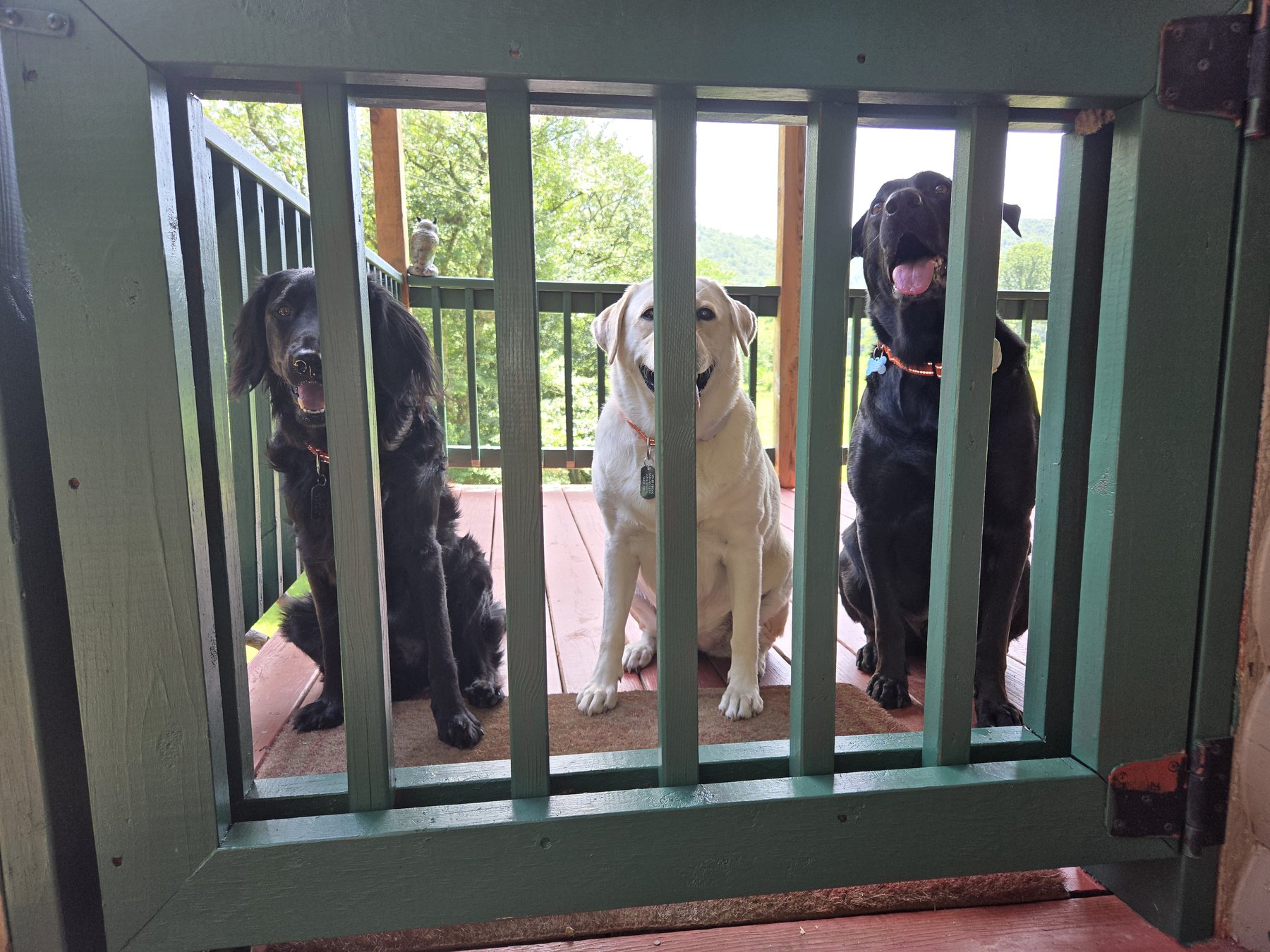
The North Georgia mountains are a great place to bring a dog. They are also a real wilderness environment. Black bear, coyote, copperhead snakes, and ticks are all present. The Toccoa River moves fast after rain. Summer heat affects dogs differently than people. None of this should keep you home. Knowing what to watch for means your dog comes back as healthy as they left.
Dog Trackers and Cell Service
Cell service in Suches and the surrounding Chattahoochee National Forest is extremely limited to nonexistent. If your dog tracker relies on a cellular connection, including most popular brands like Tractive and Whistle, it will not work reliably here, if at all. Do not count on it.
Satellite-based trackers work in this terrain. SportDog made a well-regarded satellite tracking system, the TEK 2.0, with free satellite service included, but the line has been discontinued and is no longer in production. Garmin Alpha and similar hunting dog units are the current go-to for satellite tracking in backcountry terrain. If your dog has a history of bolting or you are hiking in dense forest, a satellite-based tracker is worth it. A cell-based tracker gives you a false sense of security here.
The TEK 2.0 was the right tool for this kind of terrain. Free satellite service included, no cell signal required, purpose-built for dogs in backcountry. If you agree it should come back, SportDog wants to hear from you.
Heat
Suches sits at around 2,800 feet elevation, which keeps summer temperatures meaningfully cooler than Atlanta or the Georgia coast. But heat can still be a problem, particularly for brachycephalic breeds (bulldogs, pugs, boxers, Boston terriers), older dogs, and dark-coated dogs in direct sun.
Signs of heat stress in dogs: excessive panting, drooling, lethargy, glazed eyes, vomiting. If those appear, getting to shade and water quickly is the commonly recommended response. Cooling the paws and belly with cool (not cold) water can help. If symptoms do not improve, a vet visit is the right call.
- Morning and late afternoon tend to be cooler for hikes and outdoor time in summer.
- Having water available for your dog is worth planning ahead. Trails in this area do not reliably have water sources.
- A parked car is dangerous for dogs in summer heat, even with windows cracked.
The Toccoa River
The Toccoa is a genuine mountain river. In normal conditions it is shallow, clear, and a natural cool-down after a hot trail. After rain, it is a different situation.
- After heavy rain: Water levels rise fast and current increases significantly. Waiting 24 to 48 hours before letting your dog in is commonly recommended.
- Swimming ability varies. A dog that handles calm water confidently may struggle in current. The pools here are deep enough to matter.
- A dog life jacket is worth considering for strong-current sections or dogs that are not strong swimmers.
- At riverfront cabins, water access is constant, including at night. Worth factoring into how much freedom a dog has to roam.
For the fun side of the Toccoa, our guides to tubing and kayaking and trout fishing cover what the river is like when conditions are right.
Leash Requirements
Leash rules vary by county and trail, and enforcement in rural mountain areas is inconsistent.
Fannin County does not address leash requirements in its STR ordinance, and we could not locate a standalone leash law for the county.
Union County STR rules require that pets stay within the boundaries of the property and be accompanied by their owner when outside in an unfenced area. It is mountain wilderness. Black bear and coyote are active in the area, so keeping your dog close is good sense regardless of any rule.
Wildlife
The Chattahoochee National Forest surrounds Suches on all sides. Wildlife is not occasional. It is resident. Trail cameras at cabins in the area have captured black bear, coyote, fox, wild turkey, deer, and more.
- Black bear: Present in the area. A dog off-leash that encounters a bear can provoke a chase and lead the bear back to you. In bear country, keeping all food, pet food, and trash inside when not actively in use is the commonly recommended practice. Leashing on trails is commonly recommended.
- Coyote: More common than most guests realize and active near the cabins, particularly at dusk and dawn. Small dogs benefit from supervision when outside at night.
- Wild turkey and deer: A strong prey drive can pull a dog into a situation quickly. Leashing on trails is worth considering.
- Porcupine: Found at higher elevations. A nose full of quills means a vet visit.
We've logged what cameras in the area have captured in our wildlife blog.
Snakes
North Georgia has venomous snakes, primarily copperheads. They are not aggressive but they are camouflaged and easy to step on or sniff at the wrong moment. Most snakebites to dogs happen on the nose or face.
- Staying on trail and keeping dogs away from rock piles, log piles, and dense brush is generally recommended. These are common snake shelter spots.
- If a dog is bitten, the standard guidance is to avoid cutting, sucking, or applying a tourniquet and get to a vet immediately. Swelling around the bite site typically appears within minutes.
- Rattlesnake vaccine is available and worth discussing with your vet before a mountain trip.
Ticks
Mountain forest means ticks year-round in Georgia, with peak activity in spring and fall. A dog that spends any time in the woods, tall grass, or leaf litter will encounter ticks.
- Prevention before a mountain trip is commonly recommended. Topicals, chewables, and collars all work. The one that is not current does not.
- Checking your dog every evening is a common practice for dogs that spend time in the woods. Ears, around the collar, armpits, groin, and between toes are the spots to focus on.
- For tick removal, fine-tip tweezers with a straight pull are generally recommended. Burning or suffocating a tick is not advised.
- If a tick was attached for more than 24 hours or your dog develops fever, lethargy, or joint stiffness in the days after, a vet call is worth making.
Emergency Veterinary Care Near Suches
These are the numbers worth having before something happens, not after.
Mountain Emergency Animal Center (MEAC)
After-Hours Emergency: Nights & Weekends1163 Windy Ridge Rd, Blue Ridge, GA 30513
Phone: (706) 632-7879
Hours: Mon to Thu 6 PM to 8 AM · Fri 6 PM through Mon 8 AM · 24 hours on major holidays. This is your after-hours emergency option in the area.
meacenter.com →The Vet at Blue Ridge
Daytime Hours · On-Call After HoursBlue Ridge, GA
After-hours on-call: (706) 769-7205
Blairsville Animal Hospital
Daytime Urgent Care294 Cleveland St, Blairsville, GA 30512
Urgent care during business hours. In operation since 1995.
Know Before You Go
Save the vet numbers. Pack the prevention. Enjoy the mountains.